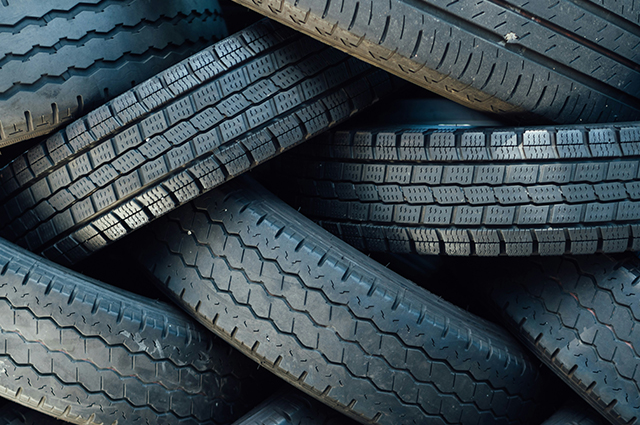
If the tire tread is worn out, you must replace it! The patterns on the tires are not just for decoration; their functions include
drainage, grip and prevention of skidding. Especially on rainy days, if the patterns on the tires are not deep enough, the tires
will just "skid" and fail to grip the ground. The car is very likely to lose control!
How can one determine if the patterns are about to be worn smooth? There will be a wear mark (a small protrusion) in each
tire's groove. The height of this mark is typically 1.6 millimeters, which is the minimum safety standard set by the country.
Once the tread has reached the same level as this small protrusion, it indicates that the tire's lifespan has come to an end
and it must be replaced. When the tire wears down to 1.6mm, its braking distance on a slippery road is about 10 meters
longer than that of a new tire. And this 10 meters could very well be the difference between an accident and avoiding it!
Generally, tires are recommended to be used for no more than 5 to 6 years, and at most 10 years. If they have exceeded 6
years, even if the tread is still intact, it is advisable to replace them. The production date of the tires is written on the side,
usually as a 4-digit number, such as "1022", indicating that they were produced in the 10th week of 2022.